How The Iran Conflict Is Influencing The Backend of LCD Pricing
What You Need To Know And How To Prepare
Summary
Geopolitical tensions with Iran are pushing up energy, shipping, and material costs throughout the electronics supply chain. For now, LCD panel production is steady. Still, OEMs could face higher prices, longer wait times, and more uncertainty because of upstream pressures on materials, logistics, and components.
Panel Manufacturing Is Not The Problem (Right Now)
When people talk about sourcing LCDs, they focus on panel availability and price.
However, the real pressure is coming from elsewhere.
Even with ongoing tensions in the Middle East, there is no clear sign that LCD panel manufacturing has been disrupted. Production in major regions is still stable.
However, costs are beginning to rise.
Why?
Because the pressure isn’t coming from the panel itself, it’s coming from the components and the manufacturing process behind it.
LCDs Are A Multilayer System
An LCD module is made up of several materials and subcomponents, such as:
- Glass substrates
- Polarizers and optical films
- Liquid crystal materials
- Driver ICs
- Backlight units
- Mechanical housings and adhesives
Each of these layers depends on global factors, especially energy, petrochemical materials, and logistics.
So, even if panel supply seems stable, the underlying costs might not be.
Where Is The Cost Pressure Coming From?
The current conflict in Iran is not directly affecting LCD factories.
But it is putting more pressure on three key areas that affect display manufacturing.
Energy: Impacting The Entire Supply Chain
Making LCDs uses a lot of energy, from processing glass to assembling backlights.
Fuel costs affect display manufacturing in two main ways.
Directly, through electricity pricing, especially in regions like China, Taiwan, and Korea that rely on imported energy sources such as oil, LNG, and coal.
Indirectly through higher costs for raw materials and logistics, including petrochemical-based films, chemicals, glass substrates, and finished modules.
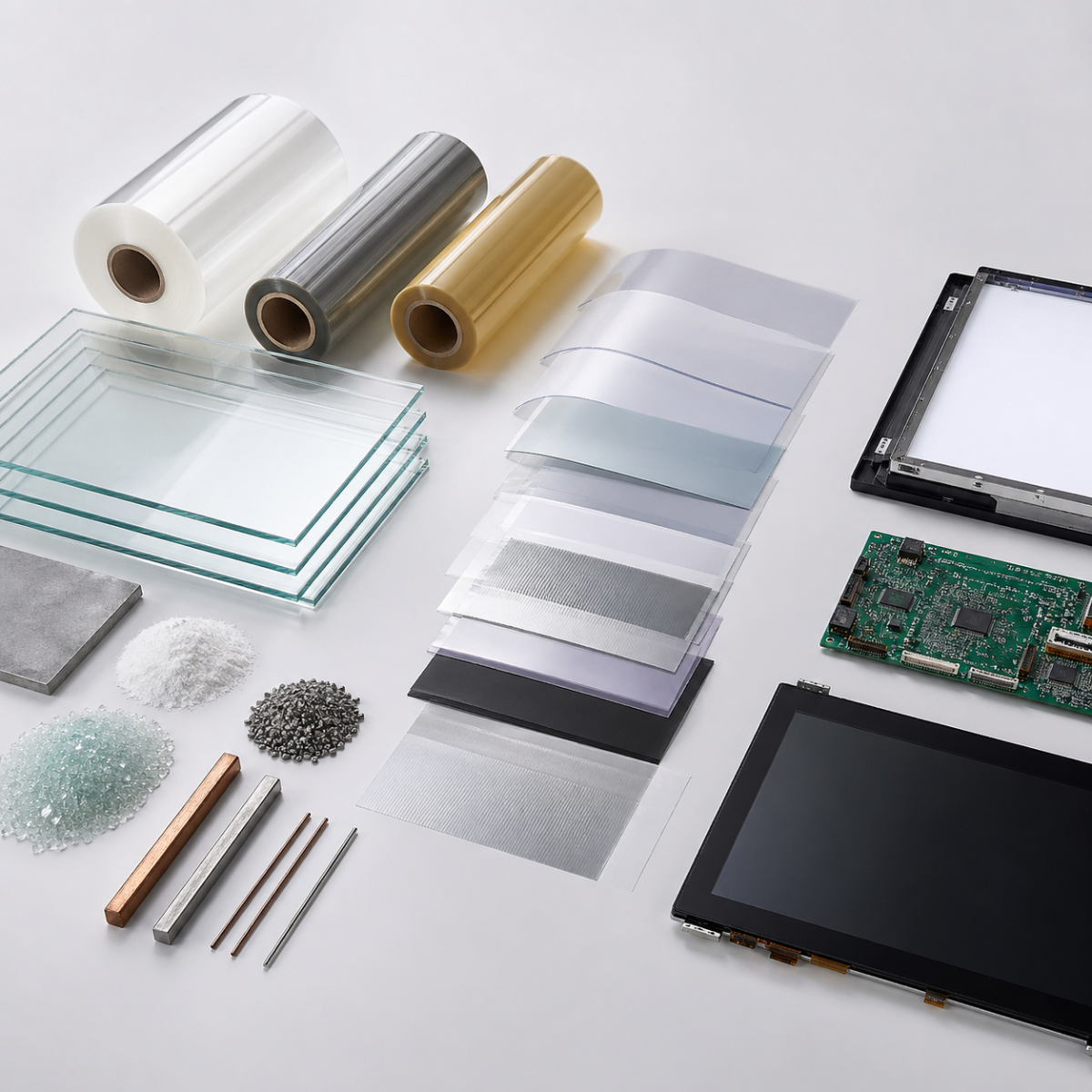
Display Materials
Many display materials are also tied to oil and gas, including:
- Polarizer films (PET, TAC)
- Optical and diffusion films
- Adhesives and bonding layers
- Plastics used in backlight units and housings
Energy-Intensive Processes
There is also a more technical side to this that is often overlooked.
The most energy-intensive part of LCD production is the TFT array process. This is essentially semiconductor-style fabrication on glass.
It includes steps such as:
- Photolithography (exposure tools and steppers)
- Plasma etching (vacuum systems with RF power)
- Thin-film deposition (CVD and sputtering)
These processes run continuously in tightly controlled environments and require significant electricity, cooling, and gas handling.
On top of that, cleanroom infrastructure adds another major layer of energy demand.
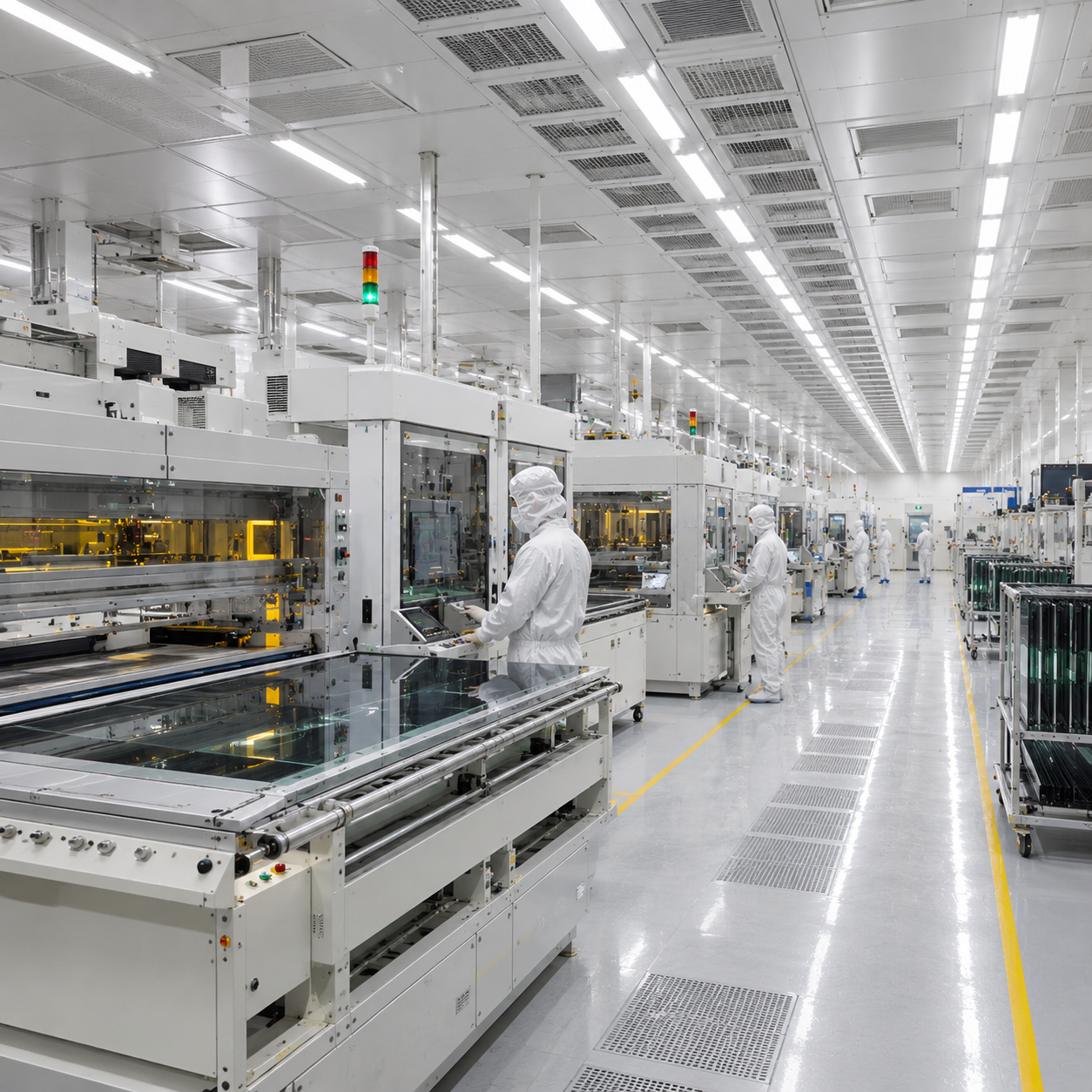
Cleanrooms
Cleanrooms operate 24/7 and consume significant energy for:
- Air circulation and HEPA filtration
- Temperature and humidity control
- Constant airflow to maintain particle-free conditions
In some cases, the facility overhead required to maintain these environments can rival or exceed the energy used by the production tools themselves.
When energy prices go up, it affects the cost of making displays.
This has a ripple effect throughout the supply chain.
Logistics: Immediate Cost Impact
Logistics costs usually respond quickly to changes in fuel prices.
Rising diesel costs are already affecting:
- Movement of raw materials to factories
- Inland transport (rail, truck, barge)
- Distribution of finished modules to OEMs
Display manufacturers are dealing with higher costs for both incoming materials and outgoing shipments.
As diesel costs rise, the impact is felt quickly across both regional and global transport.
For OEMs, this means more ups and downs in pricing and delivery schedules.
Materials: Slower But Building Pressure
Key materials used in making LCDs are also coming under more pressure.
These include:
- Petrochemical-based films and plastics
- Indium used in ITO transparent conductors
These materials often face price and supply swings. Right now, higher energy costs and global risks are making things even tougher.
The Lag Effect
Cost increases do not appear all at once. You might notice them in one area first, while others remain unchanged for a while.
In the early stages:
- Suppliers absorb some of the increase
- Internal efficiencies are used to offset costs
- Existing contracts help stabilize pricing
However, things change as time goes on.
If prices keep rising, more of these costs will eventually be passed down the supply chain.
For OEMs, this can mean:
- Pricing changes later in the cycle
- Gradual increases in lead times
- Fewer options once changes become visible
What Should You Be Doing Now?
We are not at a crisis point yet, but ongoing geopolitical instability is worth watching. The market is moving from stable pricing to a more unpredictable situation.
A few suggestions for OEMs:
There is no need to panic, but it is wise to stay cautious and be ready to avoid unexpected problems later.
A Broader Shift In Display Sourcing
For years, people have chosen displays mainly based on performance and price.
That is starting to change.
Now you need to consider:
- Supply chain resilience
- Material dependencies
- Exposure to global energy and logistics trends
This is not about whether panels are available—they are. The real issue is that the system supporting panel manufacturing is under strain.
Bottom Line
The conflict in Iran is not creating an immediate LCD shortage.
However, the conflict is increasing cost pressure across the entire display supply chain.
While logistics and materials are part of the story, the largest impact often comes from energy.
The most energy-intensive parts of LCD production include:
- TFT array fabrication: semiconductor-style processing on glass
- Color filter processing: thermal and lithography-heavy steps
- Cleanroom infrastructure: constant, high baseline energy demand.
These processes run continuously and require stable, high-volume electricity and environmental control.
So when fuel prices rise, the biggest cost driver is not shipping.
It’s the electricity and heat required to operate and maintain fabrication facilities 24/7.
For OEMs, this reinforces an important point:
The question is not just whether a display is available.
It’s how stable the cost and supply of that display will be over time.
By understanding where these pressures come from, you can plan ahead and avoid issues later in the product lifecycle.